
 CLICK HERE TO DOWNLOAD THIS IMAGE & COLOR IT IN!
"Roll for initiative."
When you're playing an RPG, those three words signal the start of chaos…and each decision thereafter determines whether your party survives or becomes another cautionary tale.
It's not dissimilar to cybersecurity incidents, where IR consultants face the same moment of truth. The trial by fire, if you will. When the breach notification pops up, you become the Dungeon Master of a high-stakes campaign where stakeholders are your party members, each with different abilities, motivations, and breaking points, and the loss could amount to millions of dollars or a business closure.
IBM's 2024 research shows that organizations containing breaches within 200 days save $1.76 million versus slower responders. But in the realm of crisis communication, action must be swifter still, for stakeholder trust erodes in hours, not months.
This is your guide to mastering the art of crisis communication, both before and after a breach.
A skilled Dungeon Master knows his or her players before rolling dice. As a CISO or cyber leader, you need to know every stakeholder in your organization prior to creating a crisis communication strategy. As you do, you’ll find that stakeholders typically fall into two camps: internal and external.
Like any epic campaign, effective crisis communication requires detailed playbooks that scale with incident severity.
Some Dungeon Masters find it helpful to develop incident severity classifications that initiate specific communication protocols. For instance, a Level 1 incident might only rouse your internal IT sentinels, while a Level 4 network siege demands immediate board alerts, customer communications, and regulatory filings, no matter the hour. These classifications should be crafted around impact, and automated where possible to reclaim precious minutes better spent containing the threat and restoring order.

We recommend drafting message templates for every stakeholder type and incident level to streamline comms when the alarm sounds. Pre-approved language accelerates response while maintaining accuracy and legal protection, and allows you to be as clear as possible when pressure mounts. Each template should speak the right tongue: technical clarity for IT, business impact for executives, and plain, reassuring guidance for customers.
As you build your plan, remember to weave legal privilege into your communication tapestry. Many teams summon legal allies early for guidance on which messages may be discoverable in litigation. This enables your party to frame communications in a way which simultaneously protects your flank and maintains trust with stakeholders. The goal: balance clarity with caution, so your words stand strong in both court and crisis.
During active incidents, IR consultants must manage multiple parallel comms campaigns where each party's actions affect the others. In these cases, information triage becomes critical, especially with the threat of discombobulation from the "fog of war" and the general stress of the situation.
When incident scope is uncertain, communication protocols must become your compass. Create these (in addition to the aforementioned templates) as a rallying point for when things get hairy. Use language that acknowledges the investigation’s unfolding nature while sharing what’s known and actionable. Then, set your cadence. Automate updates that build trust without venturing beyond what can be promised in terms of timeline and scope. And, as any seasoned chronicler would, preserve every message and version, leaving a clear record for post-incident analysis.
Unfortunately, traditional TTX scenarios often focus on technical response while tossing communication practices to the wayside. When incidents strike, communication readiness draws the line between a coordinated response and a campaign in chaos.
A solid crisis communication plan may look clean on paper, but in the thick of response, execution is the true test. Without practice, even well-laid plans can falter when it matters most.
.png)
The solution is simple. Dungeon Masters have to design TTX scenarios that prioritize message deployment speed and accuracy, grading based on metrics like outcome and stakeholder reception.
Did they receive your message? Did they understand it? Do they understand what next steps need to be taken in their role?
Drills in synchronized communication train the party to speak and move as one. Confidence grows, clarity sharpens, and your comms strategy becomes a well-rehearsed art rather than a scramble.
If you’re not sure where to start, consider role-playing different stakeholder perspectives to see how your messages will be received, and to give the "messenger" practice in actually relaying the message or triggering the send. Have your team play the parts of the board member guarding reputation, the customer champion defending privacy, the regulator seeking compliance, and the media shaping the public story. This gives you and the other guild members the real-life feel of a comms strategy in action during a breach.
Once your team has trained in coordinated communication, raise the difficulty by running drills that stress-test approval chains. Simulate weekend breaches when key leaders are off the grid, or legal reviews that stall critical messages. These scenarios uncover and address weak points and bottlenecks prior to a real-life encounter.
Finally, we recommend that you conduct cross-functional communication drills using members that are outside of your internal IT guild (for example, legal, PR, and executive teams). Through these sessions, you'll learn how each character moves and speaks within the larger story. The result? Legal stays covered, stakeholders stay confident, and your comms game levels up across the board.
Ready for some real-life training? Here are a few tips to help you run the session.
After you've resolved the technical incident and sheathed your sword, bring out the quill and assess how well your crisis communication strategy actually worked. You want to do so while the experience is fresh, using tools like team and stakeholder satisfaction surveys in conjunction with in-hand customer trust preservation metrics.
While victory looks different depending on the organization and industry you serve, most measure whether crisis comms maintained business relationships, regulatory standing, and public confidence. Consider doing the same.
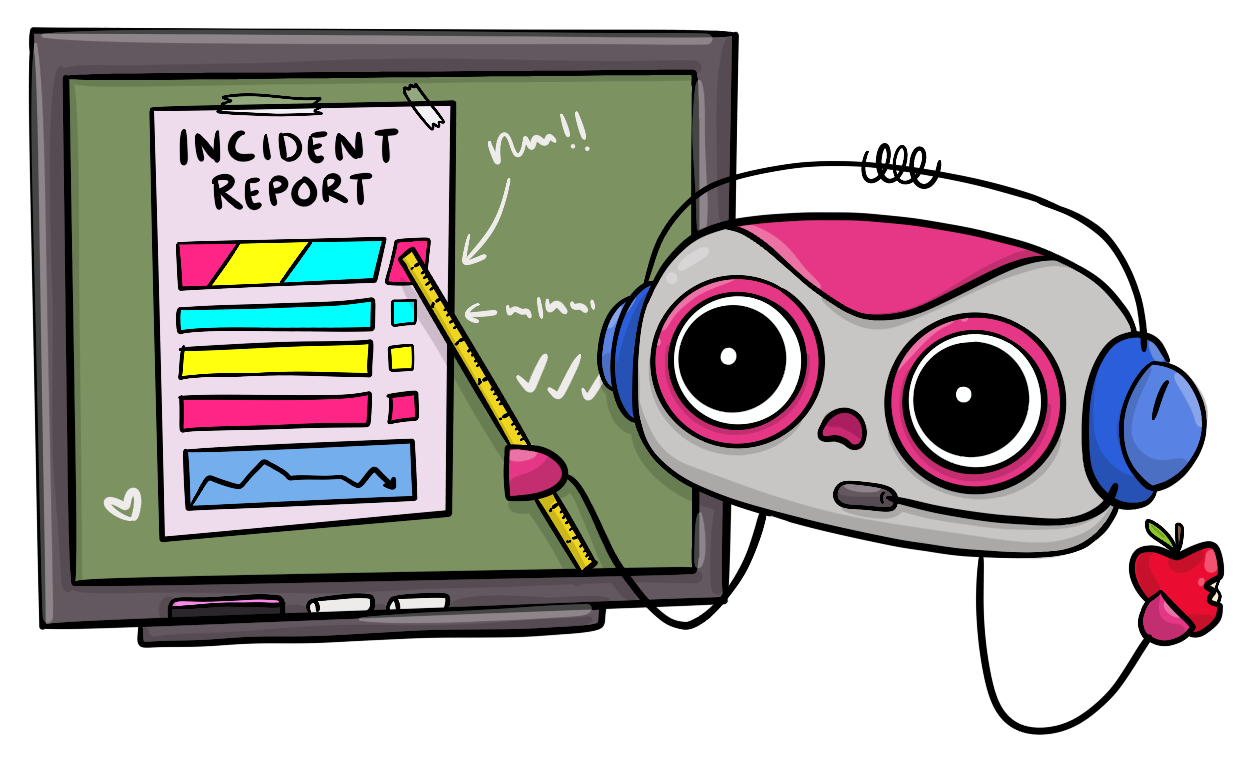
After the debrief dust settles, translate insights into action. Update your crisis communication playbooks so they reflect what was effective in the field. Note what worked, and what absolutely didn't. Take note of which groups required specific approaches, and which held steady with a general communications strategy.
Some stakeholder relationships may require active repair through enhanced transparency, strengthened safeguards, or refined communication protocols. Others may remain neutral, understanding the journey you've faced. Only time will tell…but you'll want to be prepared to use your incident experience to build resilience in the relationships, regardless.
By approaching incident communication like a skilled Dungeon Master, with detailed preparation, stakeholder understanding, and adaptive orchestration, IR consultants can transform potential catastrophes into demonstrations of organizational resilience.
We'll be honest: Mastering this this type of campaign takes time, discipline, and more than a few practice runs. But those who commit to it gain a lasting edge: rapid recovery, trusted partnerships, confident regulators, and an unbroken rhythm of business continuity.
Will you be ready when it's time to roll for initiative? Ally's TTX platform provides the training ground required for developing these critical skills, automating transcripts, translations, and insights so Facilitators can focus on leading the story, not logging the details. In minutes, your findings become a custom report built for a king or queen.
Get your free demo today and discover how Ally converts crisis communication training from theoretical knowledge into practical expertise.


Larci Robertson is a seasoned cybersecurity leader with 20+ years of experience across military, government, and corporate sectors.
Read more
About Ally Security
Ally is here to support TTX Facilitators in creating a virtuous cycle where exercises run more swiftly and frequently, deliver greater value, and bring organizations closer to true preparedness.
Dear Asa is your anonymous scroll to share triumphs, tribulations, and “you had to be there” moments. No names. No judgement. Just true incident response tales forged in the heat of battle.