
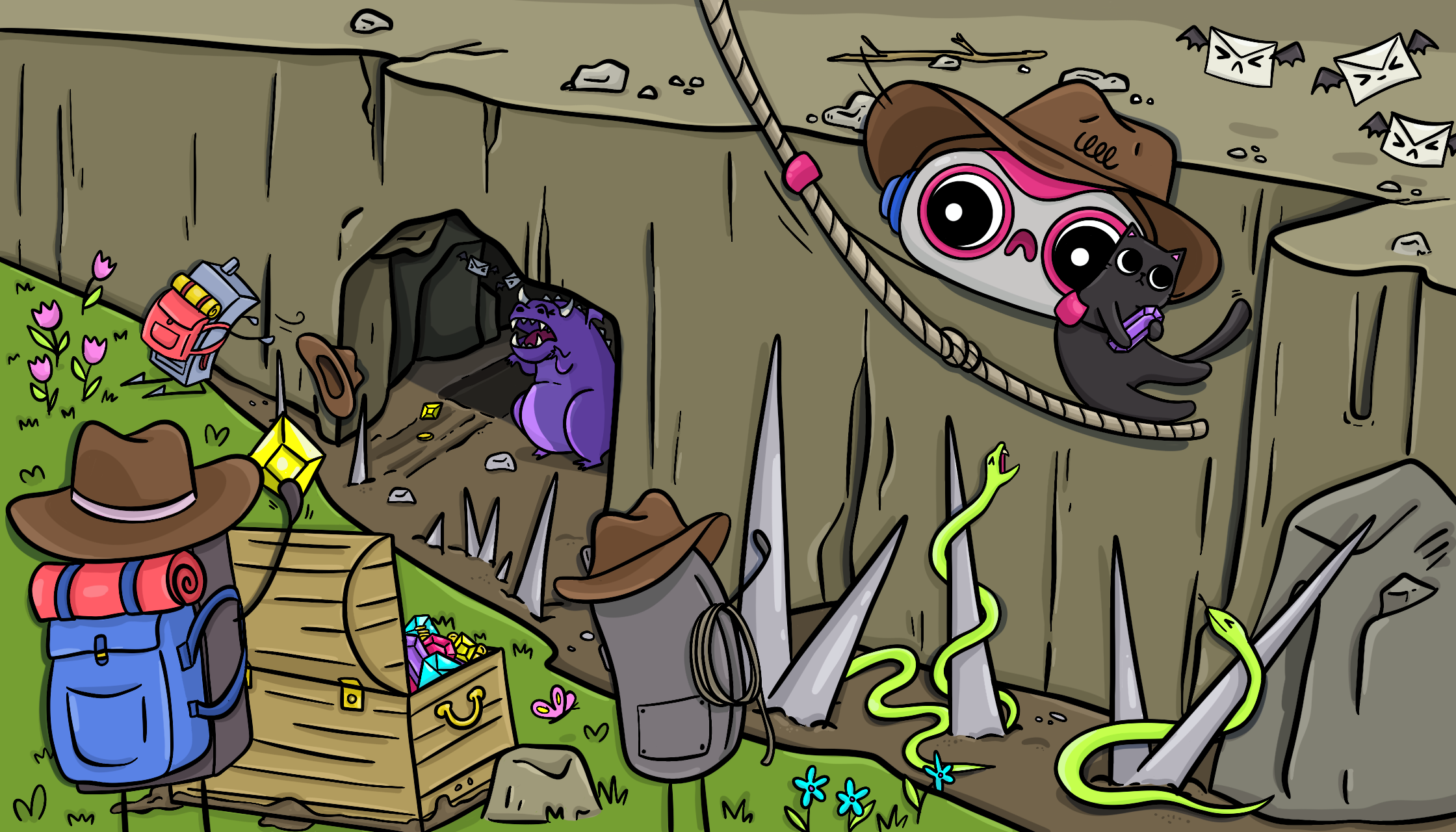
 CLICK HERE TO DOWNLOAD THIS IMAGE & COLOR IT IN!
Imagine you’re guiding a party of participants through a picture-perfect cybersecurity tabletop exercise. Everyone at the table, from IT guildmates to C-Suite stewards, is fully engaged and dialogue is flowing. The conversation is sharply focused, remaining rooted in the scenario. As real preparedness gaps are revealed, a treasure chest overflowing with actionable insights makes itself available to the party.
To claim that treasure, you must carefully navigate the hidden hazards that threaten the efficacy of your TTX. These pitfalls come in two types. The first is mechanical, traps which can be disarmed during the preparation phase before your exercise commences. For example, if leadership team members will be questing with you, it’s a good idea to prepare printouts since execs like to have something physical to reference.
The second type of pitfall is psychological. These are the dangers that awaken once the TTX begins and the party is inside the dungeon. These are not traps you can spot on the map, but illusions, echoes, and unseen forces that twist perception and steer decisions astray. Rather than halting progress, psychological pitfalls misdirect it, leading the group confidently in the wrong direction.
It falls to the Facilitator to disarm mechanical traps, dispel psychological illusions, and keep the party moving in the right direction. Read on to learn what the seven most common pitfalls are, and how you can avoid them.
Mechanical pitfalls are the snares set at the dungeon’s entrance. When properly disarmed, the party can advance through the TTX with momentum and purpose. When neglected, these pitfalls sap energy from your TTX early on. Be sure to consider these while doing tabletop exercise planning.
TTX duration is the torch your party carries into the dungeon. If it burns for too long, then you can wave goodbye to that treasure chest of actionable insights waiting at the end of the exercise. Set the session length to match the party you’ve summoned. For C-Suite stewards, longer councils held sparingly will yield stronger engagement, but know your limits. Generally, a leadership quest should not stretch beyond three hours. For broader ranks, shorter and more frequent questing keeps party members engaged.
When considering what hour your quest should begin, choose wisely. A party called too late in the day will arrive weary, their focus already dulled before they set off. Gather when minds are sharp and attention is at its peak, which tends to be around 10 AM. Lunch and early afternoon work too, just be wary of scheduling a TTX after 2 or 3 PM.
If the scenario does not resemble the real world your party actually lives in, then they will never believe the dangers your TTX presents. For example, working in an inject about a fire in a data center means little to a kingdom that has no such thing. Instead, shape your scenario to revolve around the threats that stalk the lands where your party resides, drawing from lived experience, present dangers, or the counsel of a seasoned scout through an expert threat briefing.
The danger lies not only in irrelevance, but also in giving too much freedom in how to approach the exercise. In one such quest, a participant confidently declared they would simply ride out to an employee’s home to retrieve a laptop that needed to be investigated. A bold move, perhaps, but not one an incident response plan would ever permit.
Left unchecked, moments like this can pull the entire exercise off course, as others begin to build upon actions that would never hold in the real world. To guard against this, the Facilitator must lay down clear constraints through assumptions and structured choices, ensuring every decision remains tethered to the party’s actual capabilities.
Before entering the dungeon, it’s also important to decide on the nature of your campaign. Is this a cybersecurity training rehearsal with a large host of adventurers, where knowledge is taught by a single experienced voice and the path is more guided? Or is this an immersive journey, where engagement is the master key and each voice shapes the outcome? Both have their place, but the difference must be intentional. A party expecting one will disengage if given the other.
Psychological pitfalls emerge as the party moves deeper into the exercise. It’s up to the Facilitator to successfully roll perception checks throughout the TTX and detect these instances before they take root. From domineering voices to faulty assumptions, there are many forces that can steer the conversation down the wrong path.
To counter them, the Facilitator must rely on ritual and structure. After each inject, before a single voice can implant bias in the conversation, ask the party to anonymously vote on which path to take. Within the Ally app, we also ask participants to silently declare how confident they are in their decision using our Party Voting tool. If a particular choice turns out to have low levels of confidence behind it, that’s a signal to the Facilitator that the party needs to gain experience points in that area.
Once votes have been cast, use impact visualization to put their status effects on display. In Ally’s Impact Score tool, we highlight how decisions affect various attributes like brand reputation, business disruption, and data exposure risk. By chronicling these values over time, party members get an objective lens through which they can view the consequences of their choices.
Let’s now explore the most common psychological pitfalls, and how each can be avoided through the use of anonymous voting and impact visualization.
Tunnel vision sets in when the party fixates on a single path, convinced it must be the right one. As the team pours its energy into a single workstream or hypothesis, attention narrows and what began as focus turns into blindness. This type of hypnosis can lead to nervousness around suggesting alternative solutions, which only amplifies the tunnel vision effect.

To break the spell, the Facilitator must widen the party’s view. Anonymous voting reveals where perspectives diverge, ensuring that all voices are heard and each path is explored. Impact visualization then casts light on the consequences of each solution, including the one the party is fixating on. By forcing a zoomed-out view of the effects across customers, operation, legal, and risk, the party gains the clarity needed to choose the best path forward.
Similar to the previous pitfall, this one begins as a single idea. In this case, however, self-assurance hardens a singular opinion into an assumption stronger than crystal. As the party latches onto a theory presented early in the TTX, alternative hypotheses cease to be explored and this single idea becomes the only idea. Even when new evidence emerges and conflicting signal fires are lit, the party continues to return to what it perceives to be the one true solution.
The Facilitator must introduce the chisel of doubt to crack open this false certainty. Anonymous voting can surface whether party members are misaligned or uncertain in their decisions. Either is an indicator that discussion needs to delve deeper and assumptions need to be challenged. This refining strike can be followed up with impact visualization, which illuminates what could happen if the initially accepted theory is proved false. When the cost of being wrong is made objectively and abundantly clear, the party becomes more open to exploring alternative routes.
Moral discomfort manifests when the party reaches a fork in the road where no path feels like the right one. Should we pay the ransom or not? Is it better to disclose this disaster to the public now, or keep it under under lock and key until the crisis is resolved? Questions like these often cast a veil of silence over the room, as no one wants to be held responsible for making a decision that goes against the morals of others.
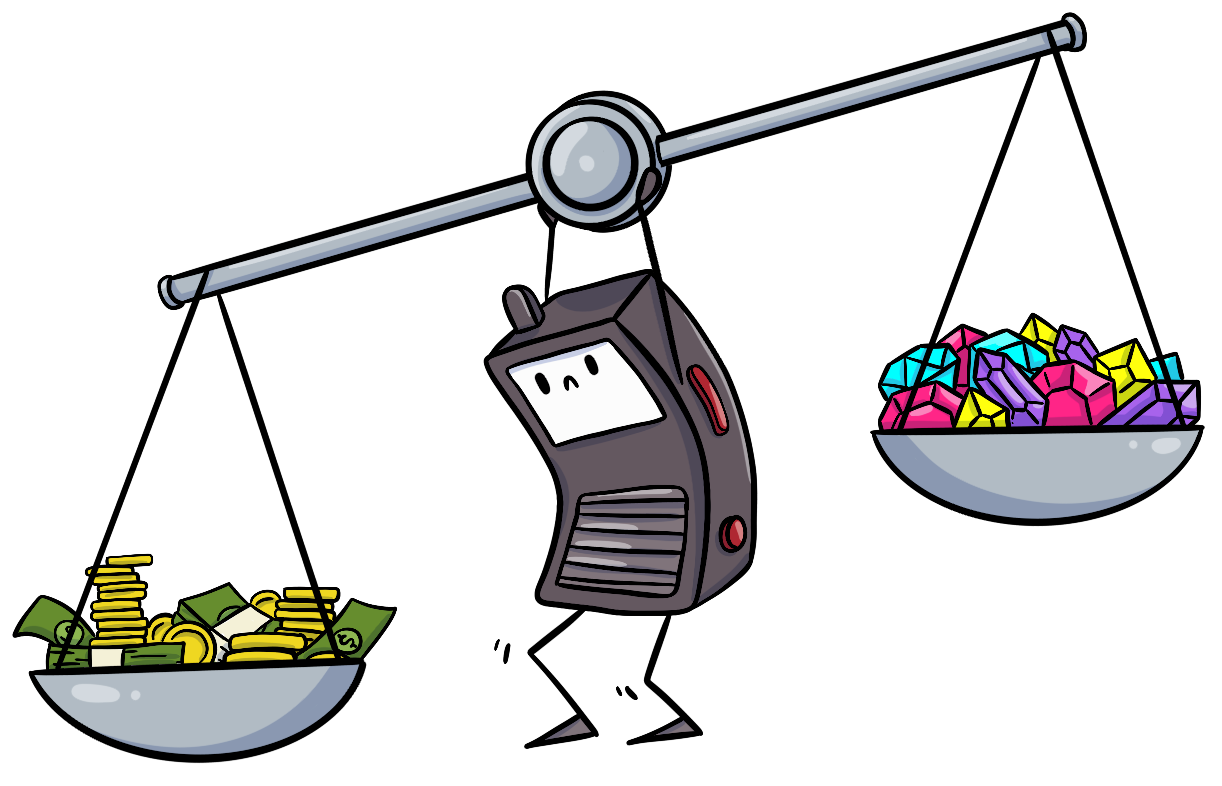
To break through the quietude, the Facilitator must find a way to spread the burden of the decision equally amongst party members. Anonymous voting in and of itself creates a more collaborative effort, and can reveal party cohesion if a majority of voters select the same option. Alternatively, impact visualization can temporarily replace morality with objectivity, laying bare the costs and consequences of each path. Once the party realizes that its members carry the weight of this decision together and clearly see the outcomes of each choice, they can commit to a path and press onward.
On the flip side of the coin, moral absolutism occurs when a boisterous voice in the party takes a holier-than-thou approach to a morally complex situation. Imagine a group of brigands have exfiltrated sensitive data, and are now demanding a pouch of crypto coins in exchange for not releasing that data to the public. Whether fueled by pure bravado or the desire to impress a superior, a party member responds to this demand with “of course we would never pay the ransom!” By taking the moral high ground, leaving zero room for doubt, and oversimplifying the situation, this person has now halted the party’s progress.
To counter this, the Facilitator must create a space where there’s no need for someone to position him or herself as the lone hero. Anonymous voting removes the opportunity for white knight theatrics. With fear of judgement and the temptation to act with moral superiority eradicated, honest perspectives are able to shine through. Couple that with impact visualization, and the conversation reverts back to an objective one.
And finally, we have the authority bias (AKA HiPPO: Highest-paid person’s opinion) pitfall. This is a trap where the highest-ranking voice at the table dictates which path the party takes. Whether intentional or not, the most senior person in the room passively succeeds on intimidation checks against the rest of the party simply due to his or her status in the organization. This converts the explorative nature of the TTX into a display of party obedience.
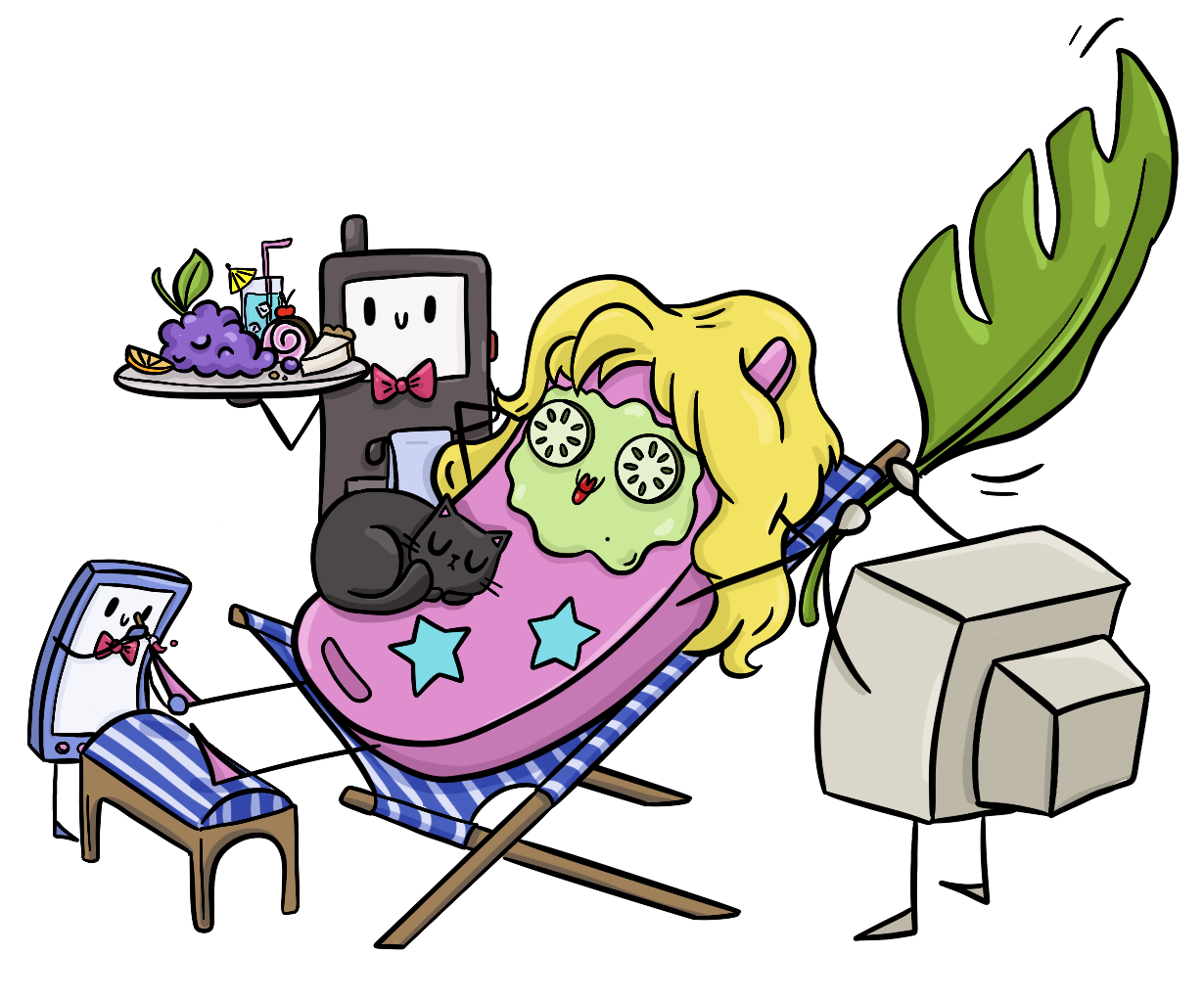
Anonymous voting ensures that rank does not determine direction, since all votes are weighted equally. Alternatively, the Facilitator can encourage party members to share varying perspectives before leaders weigh in, that way genuine disagreements can surface without the gravity of hierarchy pulling opinions into alignment. Either way can result in an eye-opening experience for the highest-ranking people at the table. Impact visualization then places emphasis on outcomes, meaning the party will make decisions based on objectivity and consequences instead of blindly following royal decrees.
Mechanical pitfalls are traps that must be disarmed before your party’s quest begins, and psychological pitfalls are illusions that must be recognized and broken as they appear throughout the exercise. By passing perception checks and identifying these hazards, Facilitators can ensure that the parties they lead safely emerge from TTXs with treasure in hand. And by treasure, we mean valuable, actionable insight!
The most common tabletop exercise mistakes fall into two categories: mechanical and psychological. Mechanical mistakes include poor timing, weak structure, and unrealistic scenarios. Psychological mistakes include tunnel vision, confirmation bias, moral discomfort, moral absolutism, and authority bias. Both must be addressed for a tabletop exercise to be effective.
Implement tabletop exercise best practices by balancing strong preparation with active facilitation. Prepare the session with relevant scenarios, clear structure, and proper timing. During the exercise, guide the party to avoid tunnel vision, confirmation bias, and authority bias.
Reduce bias in tabletop exercises using anonymous voting and impact visualization. Anonymous voting surfaces independent opinions and limits groupthink or hierarchy influence. Impact visualization shows the consequences of each decision across the organization. This keeps decisions objective and grounded.
Tabletop exercises fail when they lack realism, structure, or active facilitation. Common causes include irrelevant scenarios, poor engagement, and unchecked biases like tunnel vision or HiPPO (highest-paid peron’s opinion). When decisions drift from reality, the exercise stops revealing meaningful gaps. Strong facilitation is what keeps the exercise effective.
Ally exists to help Facilitators run exercises that earn trust, drive engagement, and surface what truly needs to be addressed. Our platform supports these goals more than ever before thanks to an arsenal of new tools for scenario generation and exercise delivery.
Our Build tool serves as a scenario generation engine, shrinking the hours-long scenario creation process into a trial that takes just a few moments. Once you’ve drafted your quest, the Run tool helps you deliver it. Featuring anonymous Party Voting and a dynamic Impact Score based on decision impact metrics, this tool puts the power in the hands of the Facilitator in both online and in-person sessions.
If you’re ready to bring a new level of clarity and engagement to your TTXs, then your next quest is simple. Book a demo, and let’s chat about how we can empower your next campaign.


Stuart Davis is a well-versed cybersecurity leader with a decade of experience building and running DFIR practices, including CrowdStrike and Mandiant.
Read more
About Ally Security
Ally is here to support TTX Facilitators in creating a virtuous cycle where exercises run more swiftly and frequently, deliver greater value, and bring organizations closer to true preparedness.
Dear Asa is your anonymous scroll to share triumphs, tribulations, and “you had to be there” moments. No names. No judgement. Just true incident response tales forged in the heat of battle.